
Gold Price – Live Gold Price Chart and Market Trends
If you are interested in the gold price today, this page provides an overview of how much gold currently costs at the latest market rate. Here you will find the current gold price online, an interactive chart, and historical price performance, allowing you to easily compare the value of gold over time. The gold price today is displayed in real time in EUR, including the price per troy ounce, gram, and kilogram. The online gold price changes according to the global spot price, exchange rates, inflation, and investor demand. In addition to the current price, you will also find a chart and an overview of the factors that influence gold price movements. DealFin provides this information based on data from global financial markets, ensuring that you always have access to reliable and up-to-date information.
Current Gold Price Today – How Much Does Gold Cost?
The live gold price widget displays the value of gold per troy ounce, gram, and kilogram in euros. This gives you an instant overview of how the gold price today is changing without the need for manual calculations. For Slovak readers, displaying prices in EUR is especially important because global markets primarily quote gold in U.S. dollars, and the final gold price in euros also depends on the EUR/USD exchange rate.
The gold price today changes continuously based on the XAU/EUR spot price, which is determined on global exchanges by supply and demand. Its movement is influenced by factors such as inflation, interest rates, geopolitical developments, and investor sentiment. Therefore, the current gold price in euros displayed in the widget is the easiest way to monitor the real-time value of gold. To better understand market trends, we also recommend viewing the gold price chart further down this page.
Gold price by year
Gold rate for the period
GOLDEN BULLS FOR PROFITABLE INVESTMENTS TODAY IN VIEW OF RISING PRICES
-
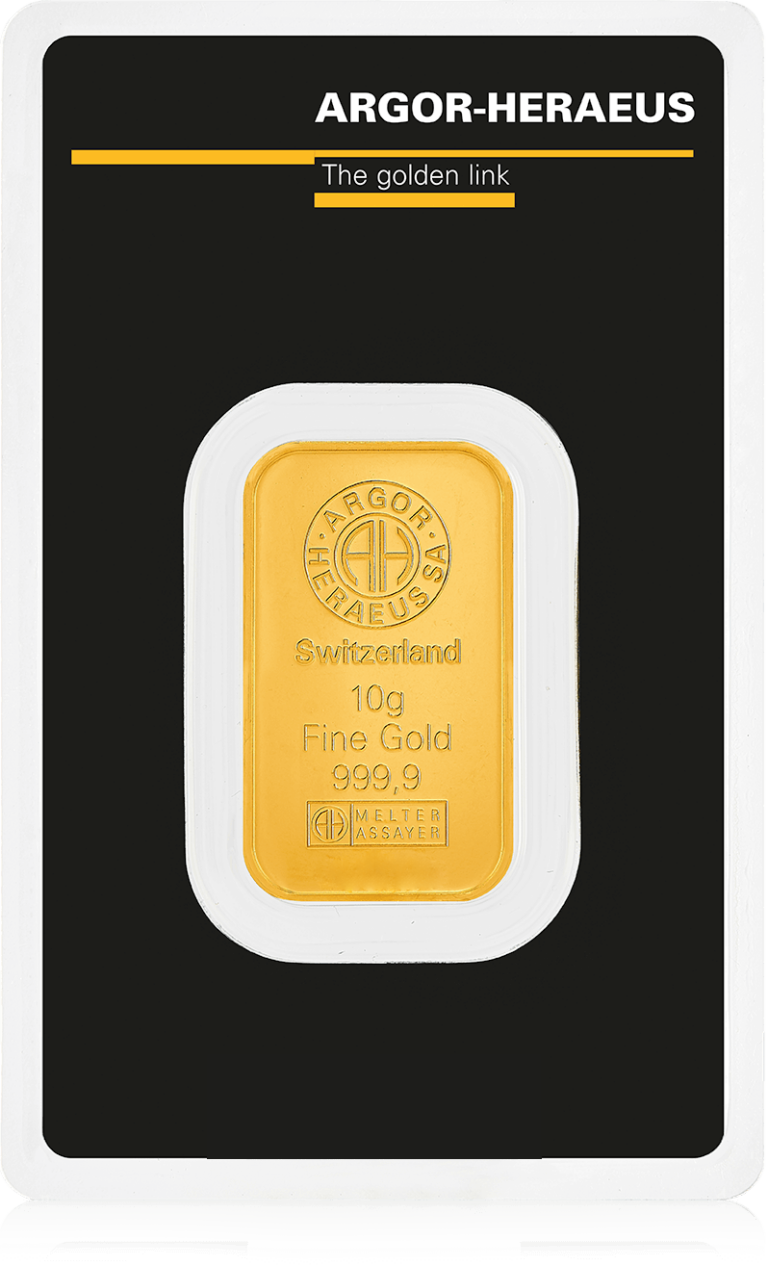
- Fine gold999.9
- Weight10 grams
- ProducerArgor-Heraeus
-
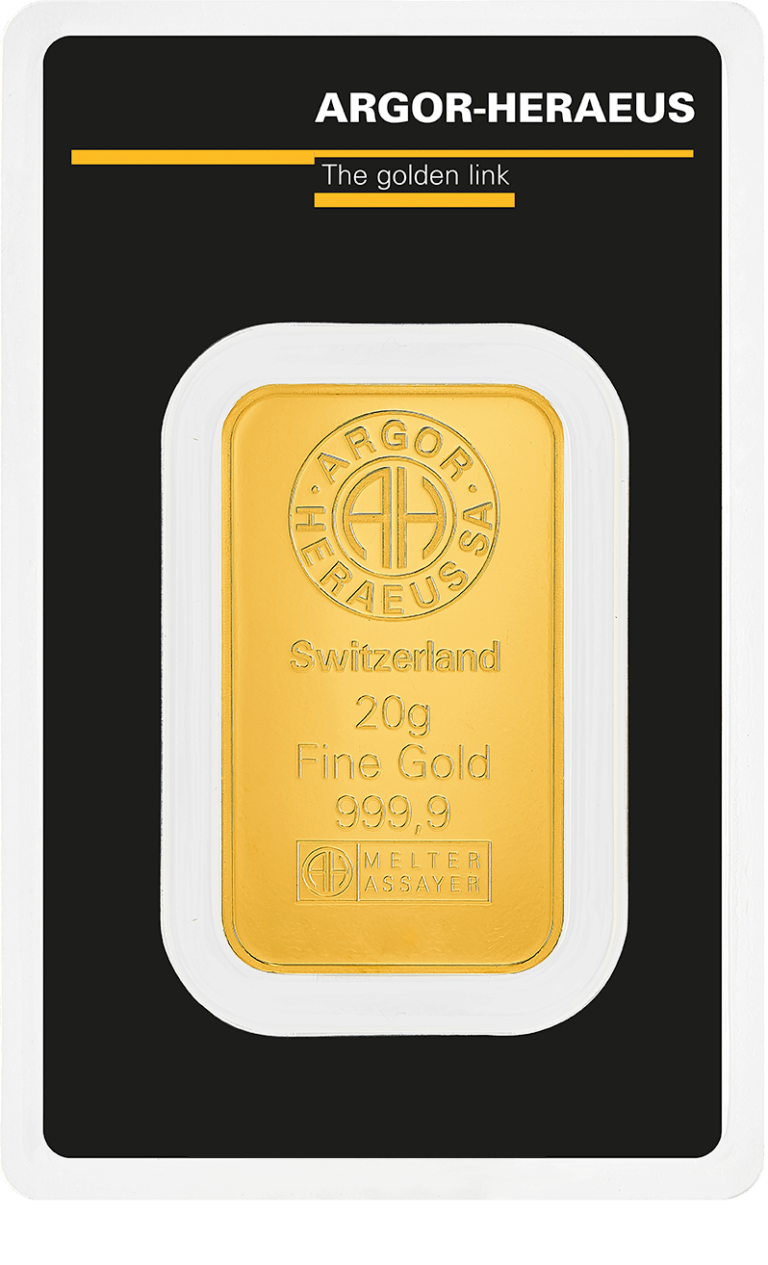
- Fine gold999.9
- Weight20 grams
- ProducerArgor-Heraeus
-
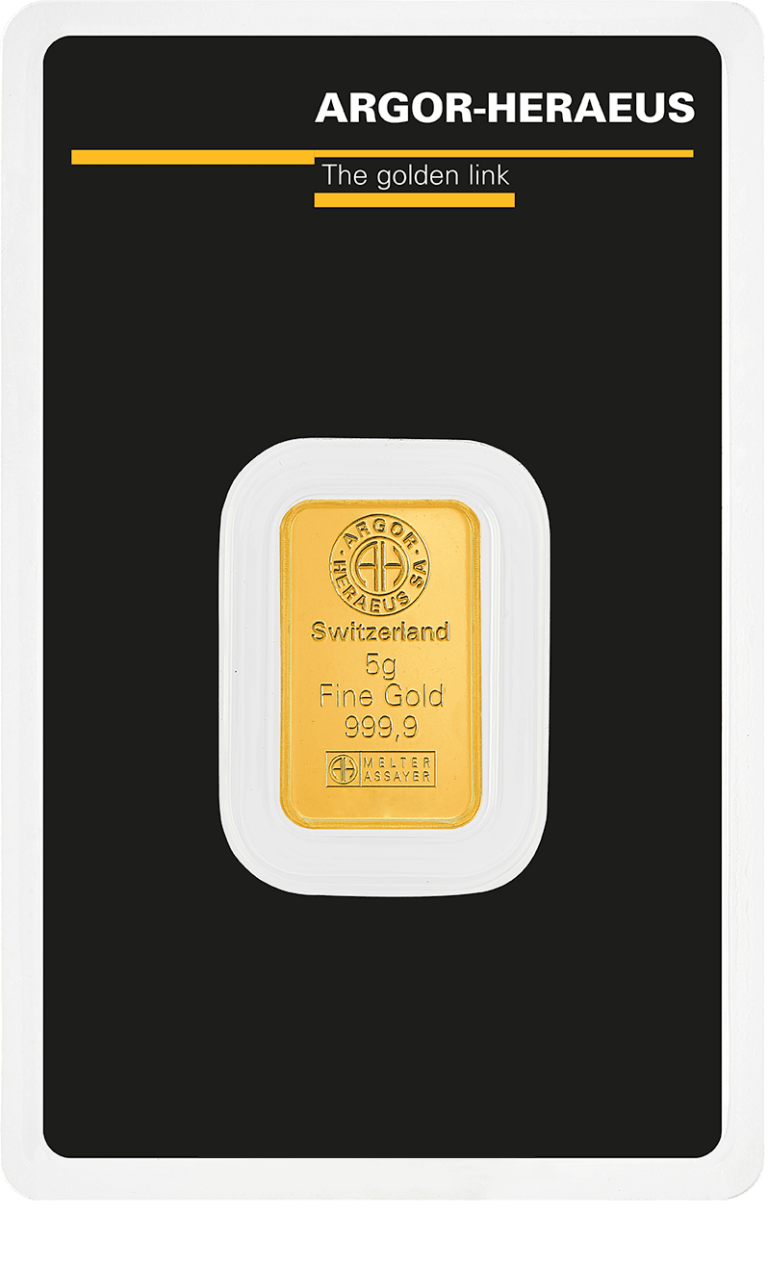
- Fine gold999.9
- Weight5 grams
- ProducerArgor-Heraeus
-
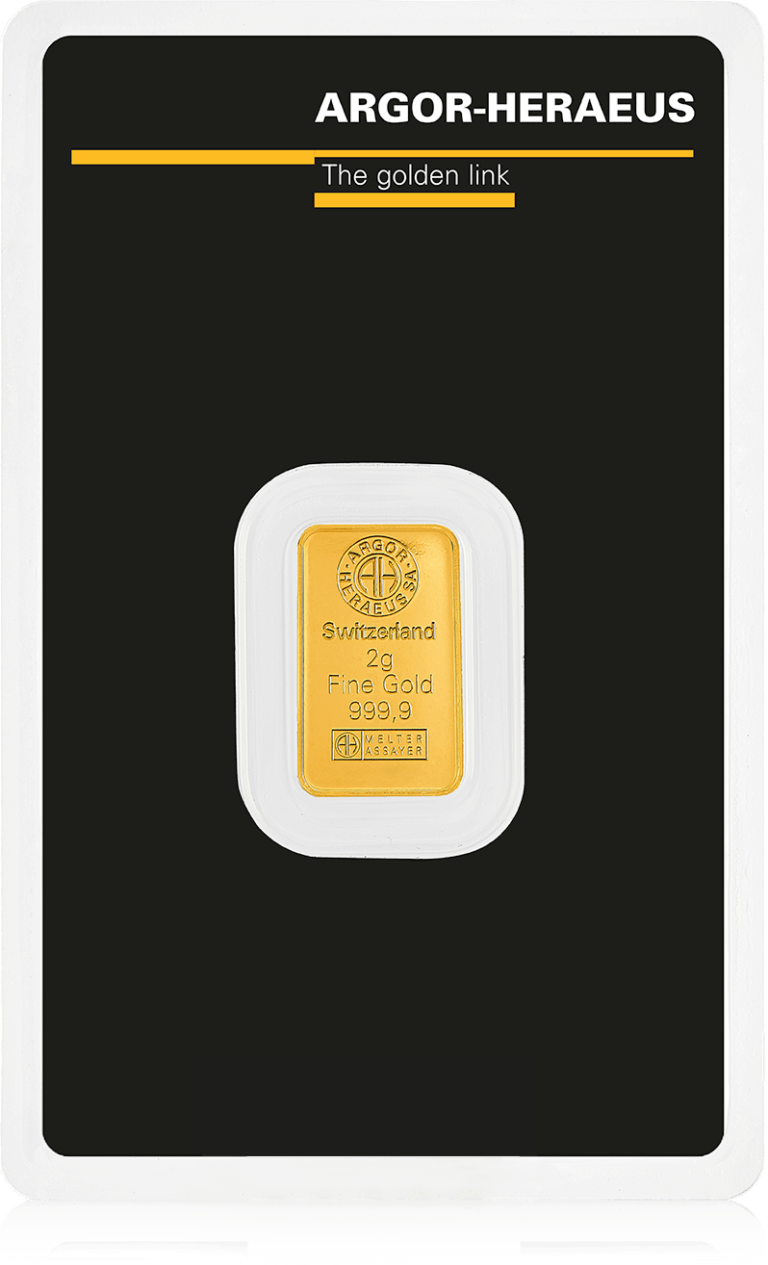
- Fine gold999.9
- Weight2 grams
- ProducerArgor-Heraeus
-
- Fine gold999.9
- Weight1 gram
- ProducerArgor-Heraeus

Gold Price Chart – Track Price Movements Online
The gold price chart helps you understand whether the market is moving in an upward, downward, or sideways trend. The interactive chart allows you to view price movements over different periods, such as the last 7 days, 1 month, 1 year, or the maximum available historical range. This makes it easy to compare short-term fluctuations with long-term market trends and better understand gold price movements in a broader context.
The chart is particularly useful if you do not want to rely solely on the current price. A single price point provides little information without context. The visualization shows whether a movement is a normal market fluctuation, a reaction to economic events, or the continuation of an existing trend. That is why the online gold price is best interpreted together with the chart, which illustrates market behavior during periods of inflation or increased economic uncertainty.
When analyzing the chart, it is important to distinguish between the spot price and the futures price. The spot price represents the approximate market value of gold for immediate delivery, while the futures price is based on contracts for delivery at a future date. The difference between the buying and selling price is known as the spread. The chart displays the indicative price trend while also reflecting fluctuations in the EUR exchange rate. If you are interested in the long-term perspective, be sure to visit the section on gold price trends as well.
Gold Price Trends – From History to the Present Day
Gold price trends have long been influenced by how investors perceive risk, inflation, and the stability of financial systems. During periods of financial crises, geopolitical tensions, or increased inflationary pressure, gold often becomes the center of attention as a store of value. Conversely, when real interest rates rise and the economy appears stable, interest in gold may temporarily weaken. As a result, gold price movements naturally reflect broader economic cycles and overall market sentiment.
Gold price movements on the market are closely linked to the policies of central banks, particularly the Federal Reserve (Fed) and the European Central Bank (ECB). Their decisions on interest rates and monetary policy have a direct impact on the attractiveness of gold as an investment. The U.S. dollar exchange rate is also an important factor, as gold is globally priced in USD. When the dollar strengthens, the price of gold in euros may behave differently than in U.S. dollars. Therefore, for Slovak investors, it is important to monitor not only global gold price movements but also the value of gold converted into euros.
The historical performance of gold prices is best understood by combining the interactive chart with the annual average price table available on this page. These tools illustrate how gold prices have changed during periods of inflation, economic uncertainty, pandemics, and geopolitical conflicts. Gold price movements are not random—they reflect a combination of economic factors, investor behavior, and global events that influence demand for safe-haven assets. Since these factors tend to repeat over time, gold price trends often follow similar long-term patterns.
Gold Price in EUR – What Influences Its Value?
The gold price in euros is the most practical indicator for Slovak readers because it directly shows how much you will pay for gold in your local currency. Although gold is primarily traded in U.S. dollars on global markets, the final gold price in euros also depends on the EUR/USD exchange rate. This means that even if the global gold price remains relatively stable, its value in euros may fluctuate due to currency movements. Therefore, the current gold price in euros reflects the combined effect of both the gold market itself and the exchange rate.
Gold is traditionally priced per troy ounce, with one troy ounce equaling approximately 31.1 grams. However, for most buyers it is often more practical to follow the price per gram, especially if they are considering purchasing smaller gold bars or coins. The calculation is simple: divide the price per ounce by 31.1. This allows you to quickly estimate the value of gold in smaller units without performing complex calculations.
When purchasing physical gold, it is important to distinguish between the spot price and the retail price. The spot price represents the current market value of gold, while the price of investment gold also includes additional costs such as manufacturing, minting, packaging, logistics, and the dealer’s margin. This difference is known as the premium and is a natural part of the precious metals market. Smaller products usually carry a higher premium per gram, while larger bars are generally more cost-efficient.
Gold Price per Gram, Ounce, and Kilogram – How to Calculate It?
Gold prices are commonly displayed in three units: troy ounce, gram, and kilogram. The troy ounce is the global market standard, the gram is practical for smaller bars, and the kilogram is typically used for larger investments. DealFin automatically displays all of these values, so there is no need to calculate them manually, while also allowing you to compare prices across different units of measurement.
If you know the price per ounce, you can calculate the price per gram by dividing it by 31.1. If you know the price per gram, you can calculate the price per kilogram by multiplying it by 1,000. Although the calculation itself is straightforward, it is important to take the premium into account when buying physical gold. The gold price chart in EUR reflects the market value, but a small 1 g or 5 g gold bar may have a higher price per gram than a larger bar because it includes higher manufacturing and distribution costs.
When comparing offers, it is useful to look not only at the current gold price in euros but also at the final price of the specific product. Smaller gold bars include higher manufacturing, packaging, and distribution costs, resulting in a higher price per gram. Larger bars generally have a lower premium per gram, making them a more cost-effective option.
Gold Price Forecast – What Do Analysts Say?
Gold price forecasts are usually based on several key factors. Analysts monitor inflation, real interest rates, the strength of the U.S. dollar, geopolitical risks, central bank gold purchases, and overall investor sentiment. However, a gold price forecast is never a certainty. It is an estimate that may change as new economic data becomes available or unexpected events occur. It is important to understand that these factors influence one another, and their combined effect determines the direction the market may take.
The outlook for gold prices tends to be more positive when inflation rises, the U.S. dollar weakens, or geopolitical tensions increase. Conversely, a strong dollar and rising real interest rates may put downward pressure on gold prices. Therefore, gold price movements should always be viewed within a broader economic context rather than through the lens of a single indicator. Analysts often develop multiple scenarios that take different economic conditions into account in order to better understand the market’s possible direction.
The content on this page is provided for informational purposes only and does not constitute investment advice.
Gold as an Investment – How Does It Differ from Stocks and Real Estate?
Gold as an investment differs from stocks, bonds, and real estate primarily because it is a physical asset without an issuer. Stocks depend on the performance of a company, bonds depend on the creditworthiness of the borrower, and real estate depends on local market conditions. Gold is globally recognized, does not corrode, and its value is not tied to the ability of any single company to meet its financial obligations. This independence makes gold a unique asset that behaves differently from traditional financial investments.
However, the value of investment gold does not increase automatically. Gold does not generate dividends or interest, meaning it does not provide regular income like some other investments. Profit is realized only when its market price rises, while gold prices may fluctuate considerably in the short term. For this reason, gold is generally viewed as a portfolio diversifier rather than the primary driver of investment growth.
Historical gold price performance shows that during periods of market turbulence, gold can serve as a protective asset and help offset fluctuations in other investments. At the same time, its value may remain flat or even decline for certain periods depending on economic conditions. Therefore, every investor should carefully consider their investment horizon, risk tolerance, and overall asset allocation before adding gold to their portfolio.
Track the current gold price on DealFin and stay informed about real-time market movements.
Frequently Asked Questions About Gold Prices
