Cleaning Gold at Home, Step-by-Step Guide
Gold jewelry is a symbol of elegance and durability, but after some time of wearing, it can start losing its original shine. Many owners are surprised to notice that their favorite ring or chain develops a matte surface or an unpleasant dark discoloration. This does not necessarily mean the metal is poor quality. The usual causes are everyday factors such as skin oil, layers of creams, traces of makeup or aggressive perfumes. Natural darkening of jewelry alloys can also occur, as they contain other alloying metals in addition to pure gold.
Many people then ask whether safe cleaning gold at home is even possible, or whether they need to visit a jeweler every time. The answer is clear, home care is not only possible, but also surprisingly simple and inexpensive. In this detailed 2026 guide, we will show you 6 proven methods that can restore your jewelry’s lost shine. We will also include important warnings, because incorrect gold cleaning can permanently damage precious metals or set gemstones.
Why does gold darken?
Pure gold, hallmark 999, does not oxidize, but because it is soft, it is not used for jewelry on its own. Common 14-karat or 18-karat pieces are alloys containing copper, silver or nickel.
These added metals react with elements in the surrounding environment. Hydrogen sulfide in the air, sweat, chlorine and cosmetics trigger oxidation, which causes gold to take on a darker shade. Properly chosen cleaning gold methods can safely remove this layer and help you understand how to clean gold jewelry without risk.
Before you start, important rules
- ⚠️ Be careful with gemstones: Jewelry with pearls, coral, opals or turquoise should never be exposed to chemicals or soaked for a long time.
- ⚠️ No rough force: Do not use abrasive substances, coarse baking soda, powders or brushes with hard bristles. You can scratch the gold.
- ⚠️ Gold-plated items: Avoid strong acids that could completely strip away the gold layer.
- ⚠️ Rinsing and drying: Always rinse jewelry in lukewarm water and dry it with a soft microfiber cloth.
6 proven methods for cleaning gold
1. Soap solution, the safest method
An ideal method for regular care and gently refreshing the look of jewelry.
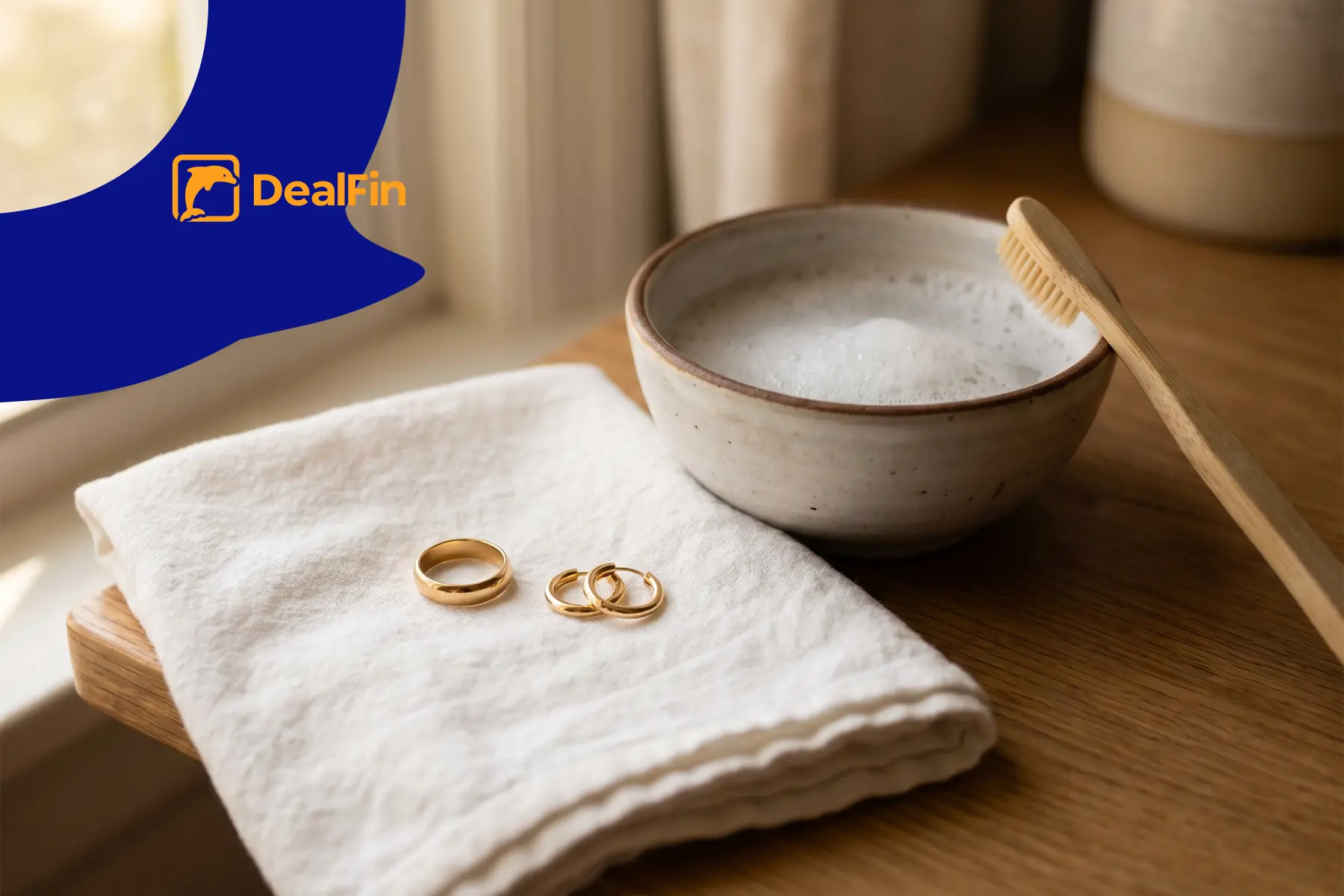
- Pour 1 cup of warm water into a bowl.
- Add 2–3 drops of mild liquid soap or dish soap without aggressive additives.
- Soak the jewelry for 10–15 minutes, clean the crevices with a soft brush, rinse and dry.
Suitable for: all types of gold jewelry, including pieces with precious stones.
2. Baking soda + aluminum foil, for heavier dirt
This method uses an electrochemical reaction that effectively breaks down the oxidized layer.
- Line the bottom of a bowl with aluminum foil, shiny side up.
- Add 1 tablespoon of baking soda and a cup of warm water.
- Place the jewelry in the bowl for 5–10 minutes so that it directly touches the foil, then rinse and dry.
⚠️ NOT suitable for: pearls or glued stones. If you are cleaning only the metal itself, cleaning gold with baking soda combined with cleaning gold with aluminum foil is one of the best choices.
3. Cleaning with vinegar
Vinegar works as a mild acid that can handle a faded surface quite easily.
- Mix 1/2 cup of white vinegar with 1/2 cup of warm water.
- Soak the jewelry in the solution for 15 minutes.
- Gently wipe it with a soft toothbrush, rinse thoroughly and dry.
Use this home method of cleaning gold with vinegar only on solid gold pieces without gemstones.
4. Toothpaste, be careful!
A traditional method, but one that requires a lot of caution.
- Apply a small amount of plain white toothpaste, without abrasive microparticles, to a soft brush.
- Very gently wipe the metal surface without applying unnecessary pressure.
- Finally, rinse the jewelry very thoroughly under running water.
If you are wondering how to clean gold quickly, toothpaste can help, but with lower purity gold there is a risk of micro-scratches.
5. Special cleaning for gold earrings
Earrings are in constant contact with cosmetics, skin oil and sweat, so they lose their shine quickly.
- Prepare a lukewarm soap solution and a soft baby toothbrush.
- If you are figuring out how to clean gold earrings with hanging elements or stones, choose only a short soak without mechanical scrubbing.
- At the end, disinfect the fastening mechanism, the post that passes through the ear, with a cotton pad and medical alcohol.
6. Cleaning blackened gold
A dark to almost black coating can appear, for example, after careless exposure to sulfur thermal baths.
- If you are wondering how to clean blackened gold, the first help is a proven chemical solution with baking soda and aluminum foil.
- However, if the darkening of the alloy is too deep, home recipes will not be enough.
- In that case, it is better to entrust the jewelry to a jeweler for professional ultrasonic cleaning, which can restore its original color.
Special, cleaning white gold
White gold has a bright shine thanks to plating with a thin layer of rhodium, which is sensitive to friction.
Wondering how to clean white gold at home? Use only a soap solution. Baking soda, vinegar and toothpaste could wear away the rhodium, causing the metal to take on an unwanted yellowish shade.
You can find a detailed guide to the properties of this metal in our article “White Gold, Hallmark, Price and Everything About It”.
What to do with gold set with stones?
Different minerals require different care, so you do not damage them instead of cleaning them:
- Diamonds and brilliants: They are extremely durable, and a soap solution will not harm them. On the contrary, it reliably removes grease and brings back their sparkle. The article “Diamond vs Brilliant” explains the difference between them.
- Pearls and coral: As organic materials, they should never be soaked in water or chemicals. It is enough to gently wipe them with a cloth dampened with clean water.
- Opal and turquoise: Because of their porous structure, they easily absorb liquids and cosmetics, which can make them look dull. For this reason, only gentle dry polishing is recommended.
Comparison table of methods
| Method | Effectiveness | Safety | Time | With stones |
| Soap solution | medium | ★★★★★ | 15 min | Yes |
| Baking soda + aluminum foil | high | ★★★★☆ | 10 min | NO |
| Vinegar | high | ★★★☆☆ | 15 min | NO |
| Toothpaste | medium | ★★☆☆☆ | 5 min | NO |
| Ultrasonic, professional | very high | ★★★★☆ | immediately | Yes, except pearls |
Most common mistakes when cleaning gold
- Using chlorine: Causes irreversible blackening and structural weakening of the alloy.
- Boiling water: Can cause thermal shock, cracking of stones or dissolving of adhesives.
- Rough sponges: Leave dull marks full of scratches on the soft metal.
- Cleaning too often: Deep cleaning gold at home is enough once a month.
When should you go to a professional?
Visit a jeweler for antiques, jewelry with expensive pearls, deep scratches or rhodium restoration. Professional ultrasonic cleaning in Slovakia costs approximately 5 to 15 euros. If you are looking for verified experts, visit the client centers connected with DealFin.sk.
FAQ, cleaning gold
The safest option is a lukewarm soap solution. For heavy buildup on jewelry without stones, use baking soda with aluminum foil.
Vinegar is safe only for solid gold jewelry. Its acidity could damage soft stones and pearls.
The metals in the alloy, such as copper and silver, react with sweat, air humidity and cosmetics.
Only with a soft cloth and soapy water, so you do not damage the protective rhodium layer.
Yes, a warm soapy bath will not harm them and will remove grease perfectly.
Use a soap solution and a soft brush. Then disinfect the fastening with medical alcohol.
Are you also interested in gold as a stable investment?
Taking care of jewelry protects its value. If you are thinking about how to protect your finances from inflation with coins or bars, read our article “Investing in Gold for Beginners” on DealFin.sk.